When an Application Requests a Writing Sample, Keep the Resume in Its Lane
When an application requests a writing sample, treat it as a separate deliverable unless the instructions say otherwise. Keep your resume focused on your experience and qualifications; use it to point briefly to a directly relevant published sample only when that helps and you have permission to share it.
A resume answers, “What have you done, and what can you bring to this role?” A writing sample answers a different question: “Can you produce the kind of written work this role needs?” Put the evidence in the place the employer requested. Don’t squeeze a paper, article, report, or link into the resume simply because the application asks for proof of writing.
The best default is a separate, clearly labeled file or requested application field. The strongest exception is a short resume reference to a relevant published work that helps the reader locate it. A link should guide the reader, not replace an explicit upload instruction or expose work you don’t have permission to share.
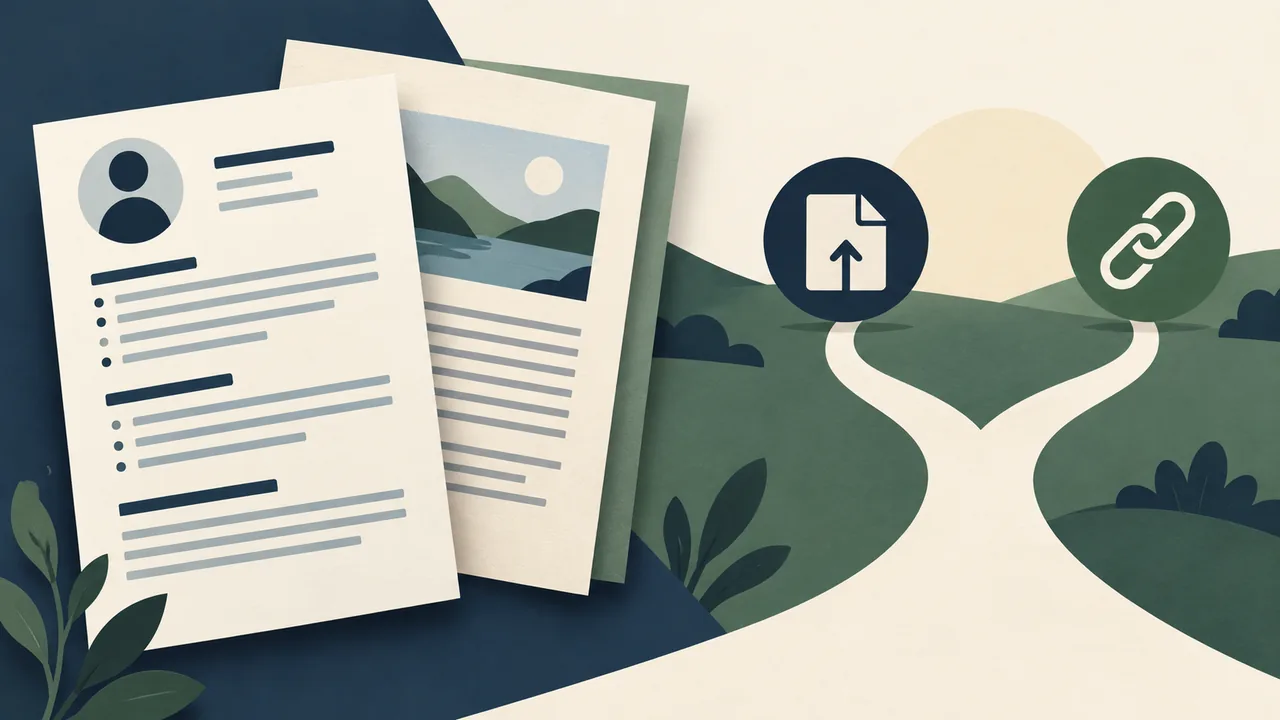
Start with the application instructions, not the resume
The application instructions decide what to submit, where to submit it, and sometimes how to label it. Follow those directions before you choose a file format or add a resume entry. “Writing sample” is not a universal specification: one employer may request a short excerpt; another may specify a page limit, topic, format, or submission stage.
Use this decision tree:
- Does the application explicitly request a separate upload? Upload the sample in the requested field. Keep it separate from the resume unless the form explicitly asks for one combined document.
- Does it specify a format, page count, topic, or filename convention? Follow the stated requirement. Don’t substitute a portfolio URL because it is easier.
- Does it request a URL or portfolio link? Provide the URL in the requested field. Confirm the link works for a reader who is not signed into your account.
- Does it request a sample but provide no upload field or format guidance? Use the application’s contact route to ask where and how to submit it. Don’t guess that a link in the resume will satisfy the request.
- Does it say a sample is optional or invite a link? Decide whether the sample adds evidence relevant to this role. If it does, provide it in the requested place. If it doesn’t, don’t attach a weak or unrelated piece to fill space.
- Does it not request a sample? Don’t send one unless the employer invites additional materials or the role’s process specifically calls for it. Keep a suitable sample prepared in case it is requested later.
Yale Law School’s career guidance, written for law students and legal applications, advises applicants to include a writing sample with initial materials only when requested, while being ready to provide one later. That guidance is not a rule for every industry, but it illustrates why the posting and application instructions take priority over a generic habit. (Yale Law School: Writing Samples, References & Transcripts)
Harvard’s resume guide describes a resume as a concise summary of abilities, education, and experience, and advises tailoring it to the role. That purpose leaves room to point to relevant work, but it does not turn the resume into the writing sample itself. (Harvard College Guide to Creating a Strong Resume)
If the instructions conflict, follow the most specific instruction from the employer or application portal. If a general job-posting page says “include a writing sample” but the portal accepts only a resume, cover letter, and portfolio URL, ask the listed contact rather than silently dropping a requirement or merging documents in a way the form did not request.

Keep the documents doing different jobs
A resume is a compact map of your qualifications. A writing sample is an example of your writing. Combining them blurs the distinction and can make both less useful: the resume grows harder to scan, while the sample may be too short or incomplete to demonstrate the work.
Give each item one job:
| Material | What it should establish | What belongs there |
|---|---|---|
| Resume | Relevant experience, skills, education, and evidence of contribution | Concise entries, truthful scope, relevant links only when useful |
| Writing sample | A representative example of your writing | The requested piece or excerpt, in the requested format |
| Cover letter or application answer | Interest and fit for this particular role | A short explanation of why your experience and sample are relevant |
| Portfolio | A navigable collection of work, if requested or useful | Selected examples with clear context, permissions, and working links |
The resume can tell a hiring reader that you wrote reports, drafted documentation, or edited articles. The sample lets the reader inspect the work. A bullet such as “Prepared weekly customer research summaries for the product team” describes a responsibility; a properly cleared sample may show the writing itself. Don’t claim that the bullet proves the quality of the writing if the reader has not seen the work.
Likewise, a writing sample should not carry the whole burden of explaining your employment history. A reader may need to know what you did, who edited the document, and what portions are yours. State that context in a short cover sheet or note, not in a crowded resume bullet.
Hypothetical example: communications role
Suppose a communications coordinator application asks for a resume, cover letter, and one writing sample of up to three pages. A candidate has a public article, a two-page internal announcement, and a resume bullet describing newsletter work.
The clean packet is three separate items: a resume describing the newsletter responsibility, a cover letter connecting that experience to the role, and the requested article or announcement as the writing sample, if the candidate has permission to share it and it fits the instructions. If the internal announcement is confidential or not cleared for external use, the candidate should not attach it just because it is the closest example. The public article may be a safer choice if it demonstrates relevant writing and meets the employer’s criteria.
The resume does not need to reproduce the article title, an abstract, a paragraph excerpt, and a link if the sample is already uploaded. A brief publication entry can still make sense if publication itself is relevant, but that entry should describe the work accurately and stay subordinate to the application’s required sample.
Separate file or portfolio link: choose the route the employer asked for
A separate file is the best default when the application requests an uploaded sample. It gives the reader a direct artifact and avoids asking them to navigate a broader site, find the right item, or request access. A portfolio link is the better choice when the employer specifically requests a portfolio, asks for a URL, or needs to see several pieces together.
Do not treat a link and an attachment as interchangeable. They create different review conditions. A file is static and easy to label, but you must choose a version and make sure it opens. A portfolio can offer context and range, but can also distract, expose unrelated material, or fail behind a sign-in wall.
| Situation | Better default | Check before sending |
|---|---|---|
| The form has a “writing sample” upload field | Upload the requested file | Format, page limit, and filename |
| The posting requests a portfolio URL | Submit a direct, working URL | Access without login and the exact sample location |
| The employer asks for both a sample and a portfolio | Provide both, with distinct purposes | Don’t make the portfolio link the only sample if a file is also requested |
| The portal has no sample field but the posting requests one | Ask the employer how to submit it | Keep the question brief and specific |
| The posting asks for a sample later in the process | Prepare one; don’t attach it early unless invited | Permission, attribution, and readiness |
| No sample is requested | Usually omit it | Whether the role or process explicitly invites extra material |
A portfolio should not force the reader to guess which piece is relevant. If you submit a link, direct the reader to the intended sample, not a generic landing page with a dozen thumbnails. If the portfolio has multiple items, label them by type and your role. A useful portfolio page makes it clear what the reader will see before they click.
If the application limits file uploads, respect the limit. Don’t combine a resume and sample into one file to bypass a form unless the employer instructs you to do that. If the portal’s constraints make the requested materials impossible to submit, contact the employer and explain the issue plainly.
Choose a sample that proves the writing the role needs
Choose the sample that best demonstrates the relevant writing, not the piece with the most impressive title or the largest audience. A job involving policy analysis may call for clear reasoning and careful use of evidence. A customer communications role may call for concise, reader-centered explanation. A technical documentation role may call for precise instructions and useful structure.
Start by translating the role into a writing task. Look for the kind of reader, purpose, and output the job implies. Then compare candidate samples against those needs. Don’t assume that “published” always means “best.” Publication can show that a piece reached an audience, but it does not automatically show that it resembles the work the role requires or that you wrote it without substantial editing.
Ask four questions:
- Does the sample resemble a real task in the role? A short procedure may fit a documentation job better than an academic essay, even if the essay is longer.
- Can a reader see your own contribution? A collaborative piece can still be useful, but explain your role and the nature of the editing.
- Can you share it? Check ownership, confidentiality, client or employer restrictions, and any approval requirements before sending.
- Can you present it in the requested form? A strong sample that exceeds the stated limit or cannot be opened is not a practical choice.
Yale Law School’s guidance is specific to legal job seekers, but its useful principles include following the employer’s directions, choosing a document that shows current ability, and explaining excerpts or outside editing. The page gives legal-field length suggestions, not a universal page limit for every profession. Use the employer’s own limit first. (Yale Law School: Writing Samples, References & Transcripts)
Hypothetical example: analyst role
Imagine an analyst application requests a writing sample. A candidate has a five-page class paper explaining a public dataset and a two-page internal memo drafted with a team. The class paper is not automatically better because it is individually written, and the memo is not automatically better because it resembles workplace writing. The candidate should compare both against the actual role and submission instructions.
If the job emphasizes explaining research to non-specialists, the class paper’s clear explanation might fit, after removing irrelevant course formatting and confirming it is the candidate’s own work. If the job requires concise recommendations for decision-makers, the memo may be more relevant, but the candidate must secure permission, remove confidential details as authorized, and identify the parts they drafted. If neither meets those conditions, prepare a new sample only if the application permits it and there is time to produce honest, representative work.
A sample is evidence, not theater. Don’t choose a document solely because it sounds prestigious. Choose the one that lets a reader fairly judge the ability the role actually needs.
Make authorship and collaboration visible
If other people shaped the writing, say so. “I wrote this” can mean anything from producing the first draft to contributing two paragraphs to a team document that an editor rewrote. A hiring reader should not have to infer your contribution from a job title or publication byline.
For a collaborative sample, identify the document’s context and your role in a short cover sheet or accompanying note. Be concrete. For example, in a clearly hypothetical case: “I drafted the methods and findings sections of this team report. A project lead edited the final version. The attached excerpt contains my sections, with headings retained for context.” That statement distinguishes drafting, editing, and team ownership without claiming sole authorship.
Possible contribution descriptions include:
- “I drafted the first version; my manager edited it for length and tone.”
- “I wrote the analysis section. Two colleagues contributed research and reviewed the full report.”
- “I edited the final copy for clarity and consistency; I did not write the original draft.”
- “I co-wrote this article with a colleague. I developed the outline and drafted the section on implementation.”
- “The attached excerpt is my individual coursework, completed for [course name].”
Use only the description that is true. Don’t inflate your share because the document is impressive, and don’t minimize a meaningful contribution out of false modesty. The goal is accurate attribution.
If you can’t cleanly separate your writing from the team’s work, submit the full document only if you have permission and explain the collaboration. If that would expose confidential material or mislead the reader about your role, choose a different sample. A modest solo piece is stronger evidence than an impressive team document presented as your own.
What “edited by others” means
Editing is not one thing. Copyediting, structural revision, fact-checking, legal review, and rewriting can affect a document in different ways. You don’t need to provide a long production history, but disclose material editing when it changes what the sample can reasonably prove about your writing.
If an editor corrected typos and tightened a few sentences, the sample may still show your drafting. If a supervisor rewrote most of the language, it would be misleading to present the final copy as an unedited demonstration of your style. Say what happened. If the employer asks for your unaided writing, choose another piece or ask whether a collaboratively edited sample is acceptable.
Some fields, especially legal hiring, commonly request context about editing and authorship. Yale Law School’s sample guidance recommends a cover sheet that identifies the document and explains the extent of editing by others. The practice can be useful elsewhere when the sample’s provenance would not be clear, but the exact expectations vary by employer and profession. (Yale Law School: Writing Samples, References & Transcripts)

Check permission, confidentiality, and ownership before sharing
A document available to you is not automatically yours to distribute. Work created for an employer, client, course, publication, or team may carry restrictions. A public URL is not proof that you have permission to repurpose the material as an application sample, especially if the piece contains personal, commercial, or unpublished information.
Before you attach or link any sample, check these questions:
- Who owns or controls the document? Review your employment agreement, client terms, publisher agreement, course rules, or organization policy if relevant. If you are unsure, ask the owner or appropriate contact.
- Does it contain confidential or sensitive information? Look beyond names. Dates, locations, project details, small teams, customer stories, internal figures, and combinations of facts can identify people or organizations.
- Do you have permission to share it with this audience? Permission to use a document internally is not the same as permission to send it outside the organization. Obtain the needed approval before submitting employer or client work.
- Would redaction actually protect the people and organization involved? Remove only what the owner authorizes. A redacted version can still reveal sensitive context through surrounding details.
- Can you share the work in this form? An excerpt, altered version, screenshot, hosted page, or downloadable PDF may each have different restrictions.
- Does the sample include another person’s contribution? Credit co-authors and explain your portion instead of presenting the document as solely yours.
- Does the link reveal more than the intended sample? Review the page, sharing settings, filenames, comments, tracked changes, and embedded metadata before sending.
Yale Law School advises its students to obtain an employer’s permission for employer-prepared documents and redact material to preserve client confidentiality. Its cover-sheet examples show how an applicant can identify modifications and permission. These are legal-career resources, not legal advice for every employment agreement; when contractual or regulatory duties are involved, consult the relevant policy or qualified adviser. (Yale Law School writing sample guidance; Yale sample cover sheets)
A privacy and permissions checklist
Before submission, confirm each item that applies:
- [ ] The employer requested this sample, or the process invites it.
- [ ] The owner or employer permits external sharing, when permission is needed.
- [ ] Client, customer, student, patient, personnel, and partner details are protected.
- [ ] Redactions are authorized and do not leave identifying context behind.
- [ ] Names, locations, dates, project labels, figures, and screenshots have been checked.
- [ ] Track changes, comments, hidden text, speaker notes, and document properties do not expose material you meant to remove.
- [ ] The sample’s authors and editors are described accurately.
- [ ] The link or file grants access only to the intended material.
- [ ] You have tested the final file or URL after making redactions.
If you cannot verify permission, don’t send the document while you “figure it out later.” Ask the owner, choose another sample, or create a new piece that does not use restricted material. If the application deadline arrives first, contact the employer about an alternative rather than disclosing information you are not authorized to share.
Redaction deserves a second review. Removing a client’s name may not be enough if the document still gives a distinctive project date, location, transaction value, or fact pattern. Search the file for names and sensitive terms. Inspect every page visually. When the stakes are high, ask the organization’s legal, privacy, communications, or management contact to review the proposed version. Don’t assume that a black rectangle in a word-processing file permanently removes the text underneath; export and inspect the final file, and use an approved redaction method where necessary.
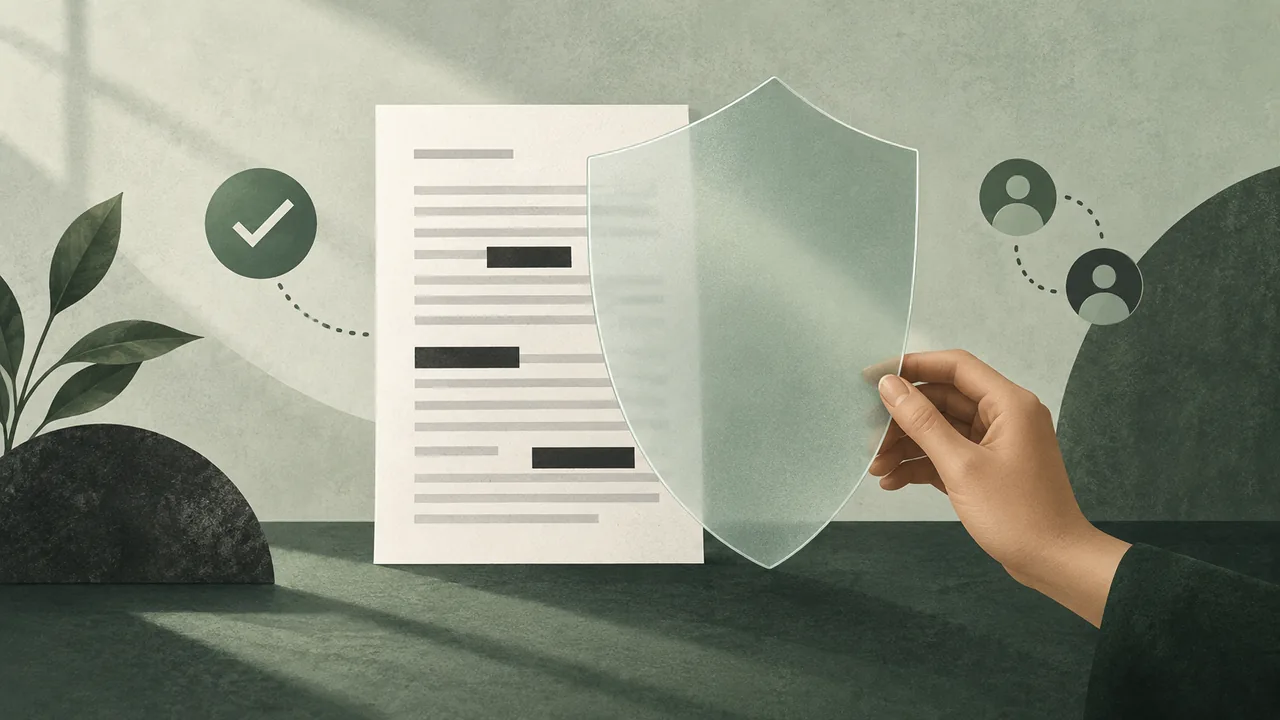
Prepare a clean, readable sample file
A writing sample should be easy to identify, open, and read. The exact format belongs to the employer’s instructions. If the application does not specify a format, use a common file type that preserves the document and opens reliably, usually a PDF for a fixed-layout text sample, unless the role or portal calls for an editable file or another format.
Give the file a plain, descriptive name, such as Avery-Chen-Writing-Sample.pdf. Avoid vague names like final2.pdf, unexplained abbreviations, or a filename that claims a status the work does not have. If the employer specifies a naming convention, use it.
Before sending:
- Export or save the version you intend to submit.
- Open that exact exported file, not only the source document.
- Check the first page, last page, headings, page breaks, links, tables, and any footnotes.
- Confirm that the selected excerpt reads coherently on its own. Add a short explanation if it begins or ends in the middle of a larger work.
- Confirm that the page count, format, and topic match the instructions.
- Make sure the displayed name and contact details are appropriate for an application.
- Check that the document does not contain hidden comments, tracked changes, drafts, or metadata you do not intend to share.
- Reopen the final file after any last-minute edit. Don’t assume the earlier preview still represents it.
A resume PDF and a writing-sample PDF have different reading demands. The resume should be concise and scannable; the sample needs enough uninterrupted text to show the work. Don’t shrink the sample to tiny type just to force it under a page limit. If the instructions set a maximum length, choose a complete excerpt or ask the employer how to handle a longer piece. Yale Law School’s legal-specific advice suggests using an excerpt when a longer document exceeds the relevant length guidance, and adding a cover sheet to explain context. The principle is useful; the legal-field page range is not a universal standard. (Yale Law School: Writing Samples, References & Transcripts)
Use a cover sheet when context would otherwise be missing
A cover sheet is useful when the sample is an excerpt, collaborative, edited by others, written for a class, or modified for confidentiality. It should make the document easier to assess, not become a second cover letter.
Include only the context the reader needs:
- The sample’s original purpose or assignment.
- The portion you wrote or edited.
- Whether someone else revised it, and in what broad way.
- Whether the sample is an excerpt and what was omitted.
- Any permission or redaction note necessary to explain the submitted version.
For example, a clearly hypothetical cover note might say: “This is an excerpt from a team research report prepared for a graduate course. I drafted the background and recommendations sections; my teammates developed the survey and data analysis. I made no changes to the excerpt after the course submission.” It describes provenance and role without claiming that the candidate did everything.
Keep the note factual. Don’t write a miniature argument about why the sample is excellent. Let the writing do that work. If the application requests a cover sheet or specific context, follow its format. If it does not, a short introductory page can still help when authorship or redaction would otherwise be ambiguous, but don’t add one to a straightforward sample if it makes the packet harder to navigate.
When a resume should mention a published sample
Mention a directly relevant published sample on the resume only when the reference adds something the application packet does not already make clear, and you have permission to share the work. The resume is a signpost, not a storage space for every link you have produced.
A reference can earn its place when:
- The role values published writing or subject-matter expertise.
- The piece is genuinely relevant to the work, not merely the most prominent item in your history.
- The publication, title, date, or link can be stated accurately.
- The work is yours to share, and your authorship or contribution is represented honestly.
- The application has no better place for a relevant link, or the resume entry serves a distinct purpose.
A compact entry might list the article title, publication, date, and a direct link, if that level of detail is useful. A resume bullet might instead describe the work and contribution: “Wrote a monthly explainer series on public transit policy for [publication]; three articles are linked in the portfolio.” Use placeholders like these only as a drafting model; never copy the claim unless it is true.
Don’t add a link simply to make the resume appear more modern. A link that leads to a broad portfolio, an expired page, a restricted document, or a piece unrelated to the target role adds friction rather than evidence. And if the sample is already uploaded in the required field, repeating its URL on the resume is often redundant. One clear route is better than two competing ones.
Harvard’s guidance treats the resume as a concise summary and emphasizes relevant, factual information. That supports the editorial choice to keep a sample reference brief and subordinate, not to turn the resume into a catalog of clips. (Harvard College Guide to Creating a Strong Resume)
What to do when the sample is confidential, unpublished, or not yours alone
If the most relevant work cannot be shared, don’t attach it and hope the reader overlooks the problem. First ask whether the owner can approve a redacted excerpt. If approval is unavailable, select another permitted sample or ask the employer whether a new, non-confidential piece would meet the request.
A new sample can be a reasonable alternative when the employer allows it. Choose a task representative of the job, set a realistic scope, and label it as a sample prepared for the application if that is what it is. Don’t present an exercise as client work, published work, or a real workplace deliverable. Don’t invent a client, brief, outcome, or endorsement to make it look more substantial.
If the available piece is a group project, a co-authored publication, or a document heavily edited by someone else, explain that context. You may be able to submit a section you drafted, provided the excerpt remains understandable, the owner permits sharing, and the edit does not distort the team’s work. If you cannot separate your contribution fairly, describe the project on the resume as collaborative experience and choose a different writing sample.
Hypothetical example: a product launch announcement
A candidate applying for a technical writing role helped create a product launch announcement. The candidate drafted the first version, a product manager rewrote much of it, and the announcement includes unreleased features and customer names. That document is not ready to send. The candidate should obtain approval, remove or replace confidential details only as permitted, and disclose the manager’s substantial rewrite. If those steps are not possible, the candidate should choose another sample or ask whether a newly written, clearly labeled example is acceptable.
This is not needless caution. The sample is meant to show your judgment as well as your sentences. Sharing protected material without approval can undermine the very judgment the application is meant to assess.
Common mistakes that make the packet harder to assess
Pasting the sample into the resume
A resume is not the place for several pages of prose. Keep the work separate unless the employer explicitly asks for one combined file. Use a concise resume reference only if it helps locate or contextualize the sample.
Sending an unsolicited sample when none was requested
More attachments do not automatically make a stronger application. Extra material can distract from the requested documents or create more work for the reader. Keep the sample ready, then submit it when invited or requested. Yale’s legal-career guidance makes this distinction explicitly for initial applications in that field; use the employer’s process for other roles. (Yale Law School: Writing Samples, References & Transcripts)
Assuming a published byline proves sole authorship
A byline can identify contributors, but it may not tell a reader which sections you wrote, how much editing occurred, or whether you can share the work. Explain your part when that distinction matters.
Linking to a portfolio without guiding the reader
A general homepage makes the reader search. If the employer accepts a link, send the direct page or identify the sample clearly. Test access in a private or signed-out browser window, where possible, so you know what an external reader can see.
Redacting names but leaving identifiers
Names are not the only identifying details. Locations, dates, role titles, uncommon events, and combinations of facts can reveal people or clients. Follow the owner’s instructions and review the exported file.
Letting a polished final draft overstate your writing
If another person rewrote substantial portions, disclose that fact. The point is not to discredit collaborative work. It is to avoid claiming evidence the file does not provide.
Adding an irrelevant link to the resume
A link is useful only if it helps the reader understand your fit or find a requested sample. Every extra item competes with more relevant evidence. Leave it off when it does not earn the space.
A practical submission workflow
Use this sequence for each application that asks for a writing sample:
- Extract the requirements. Note whether the employer wants a file, a URL, both, a specific topic, a page limit, or a sample at a later stage.
- Choose candidate samples. List two or three pieces that might demonstrate the relevant writing task. Don’t select by prestige alone.
- Check relevance and quality. Read each candidate as the hiring reader would. Does it show the ability the job calls for? Is the argument or instruction easy to follow?
- Verify provenance. Record who drafted, edited, reviewed, and approved the work. Be precise about your contribution.
- Clear permission and privacy. Obtain approval when needed. Remove confidential details only as authorized. Choose another sample if you cannot share this one safely.
- Select a complete piece or coherent excerpt. Follow the requested length and format. Preserve enough context for the reader to understand what they are reading.
- Add a short cover sheet if needed. Explain the origin, your role, editing, excerpt boundaries, and authorized redactions.
- Prepare the file or link. Give it a descriptive name, check access, and make sure the link points directly to the intended material.
- Inspect the final version. Open the exported file, proofread it, review links and page breaks, and check comments, tracked changes, and metadata.
- Place it where requested. Upload it to the designated field or provide the requested URL. Keep the resume focused and avoid duplicating information without a reason.
- Keep a record of what you sent. Save the exact submitted version and the permission or approval record, where appropriate. That makes it easier to answer questions or send the same approved sample later.
The workflow is deliberately ordinary. Most avoidable problems happen before the reader sees the writing: the wrong file, a broken link, unclear authorship, or a privacy issue that should have been caught first.
Keep the resume focused while making the application complete
When the application requests both a resume and a writing sample, submit two distinct pieces unless the employer tells you to combine them. Tailor the resume to show relevant experience and contribution. Use the sample to demonstrate the writing itself. Add a brief resume reference only when a relevant published work deserves a place there and you can share it honestly.
If you’re preparing the resume now, start with the evidence that belongs on it: role, scope, contribution, and relevant result, stated accurately. The resumetemplate.co template gallery offers designs to compare, and the free resume editor can help you assemble a separate resume document. Resumes in the editor stay in your browser on your device; the PDF uses the browser print dialog. Keep the writing sample as its own file or requested link.
For a final check, ask one simple question: if the hiring reader opens each item in the order requested, can they tell what it is, what you contributed, and why it belongs in this application? If the answer is yes, your resume and sample are doing their separate jobs.
Frequently asked questions
Should I include a writing sample on my resume?
Usually, no. Submit the sample separately when requested. A concise reference to a directly relevant published sample can help when it adds useful context or makes the work easier to find, but it should not replace an upload the employer requested.
Should I combine my resume and writing sample into one PDF?
Only if the employer asks for a combined document. Separate files are the clearer default because the resume and sample have different purposes and may be reviewed in different parts of the application system.
Is a portfolio link enough when the application asks for a writing sample?
Only if the employer requests or accepts a portfolio link. If there is a designated upload field, use it. If the instructions ask for a sample but provide no way to submit one, ask the employer how to proceed rather than assuming a portfolio link satisfies the request.
Can I send a document I wrote at work?
Only when you are authorized to share it. Check employer and client requirements, protect confidential information, and obtain permission if needed. If you cannot get approval, select another sample or ask about an alternative.
How should I describe a collaborative writing sample?
State what you drafted, edited, or contributed, and identify meaningful editing by others. Don’t claim sole authorship of a team document. Use a short cover note when the reader would otherwise have to guess.
What if my best sample is longer than the employer’s limit?
Follow the stated limit. Select a coherent excerpt if permitted and explain what it is an excerpt from. If the instructions do not explain whether excerpts are acceptable, ask the employer before submitting a shortened version that could change the meaning.
What if the application does not ask for a writing sample?
Usually, don’t attach one. Keep a suitable, permission-cleared sample prepared for a later request. Submit it early only when the employer invites additional work or the process clearly expects it.
Should the writing sample match the exact subject of the job?
Relevance helps, but a sample should first demonstrate the kind of writing the job needs. A clear, accurate sample in a neighboring subject can be more useful than a weak piece on the exact topic. Follow any topic instructions in the application.
Next step
Read the application instructions once more, then prepare the sample as a separate deliverable. Confirm the format, permission, authorship, privacy, and access. Keep the resume brief, factual, and easy to scan. Link to the sample only when the reader needs that signpost and the application allows it.