One Work History, Two Targeted Resumes: How to Choose What Changes
Keep one factual source of truth, then make separate resume versions when two job families need different evidence, language, or priorities. Change what you foreground, reorder, and explain; never change dates, titles, responsibilities, or results to make a role look like a closer fit. If the jobs substantially overlap, one clear version may work for both.

The best default: one record, separate versions for distinct job families
When two jobs ask for different kinds of proof, create two targeted resumes from the same factual career record. A resume for a customer success role might lead with onboarding, account communication, and issue resolution. A resume for an operations role might lead with scheduling, documentation, and process coordination. The underlying work stays the same; the reader’s route through it changes.
That distinction matters. Tailoring is selection and emphasis, not invention. Harvard’s resume guide recommends tailoring to the type of position, while also calling for specific, fact-based language and consistent organization. It says experience need not relate directly to the target role, but the resume should reflect skills the employer would value. (Harvard College Guide to Creating a Strong Resume)
Do not make two versions merely because the job titles differ. First compare the work: what the person does, what evidence the employer asks for, and how much overlap exists. If both postings center on the same capabilities, one well-ordered version may answer both. If their core requirements diverge, one all-purpose document is likely to make each reader work harder to find the relevant evidence.
This is a document-design decision, not a promise about interview or hiring outcomes. A targeted resume can make relevant facts easier to notice. It cannot guarantee that an employer will read, rank, or accept it.
Decide whether you need one version or two
Use the job’s core work, not the title alone, to decide. Two roles deserve separate versions when a reader would need to see different evidence near the top, or when a single summary would become so broad that it says little to either audience.
A useful test is to write a one-sentence answer for each role: “This person can do the job because…” Complete the sentence with evidence from your actual history. If both answers point to the same work and capabilities, start with one version. If one answer depends on a different cluster of proof, create a second.
For example, imagine a hypothetical applicant whose actual past work includes coordinating a small nonprofit’s weekly events, answering participant questions, maintaining registration records, and reconciling invoices. They are considering two roles:
- Customer support specialist: The posting emphasizes answering questions, resolving routine problems, documenting cases, and communicating clearly.
- Administrative coordinator: The posting emphasizes scheduling, maintaining records, processing invoices, and supporting recurring operations.
The work overlaps. Both jobs can draw on communication, records, and coordination. But the emphasis differs: the support reader needs examples of questions handled and issues resolved; the operations reader needs records, schedules, invoices, and dependable follow-through. Two versions are sensible if the application materials need different opening summaries and first bullets. One version may be enough if both postings give comparable weight to those shared responsibilities and the resume can show them clearly without becoming crowded.
| Decision signal | One version is more likely to work | Two versions are more useful |
|---|---|---|
| Core tasks | The jobs ask for similar work | One job is service-heavy; the other is analytical, technical, or operational |
| Evidence near the top | The same two or three examples answer both roles | Each role needs a different first example |
| Skills language | The postings use overlapping terms for similar capabilities | The same phrase would be vague or misleading across the two roles |
| Summary | A concise introduction can describe both targets accurately | A shared summary would become a list of unrelated strengths |
| Page space | Shared evidence fits without burying important facts | Including every useful detail makes the document crowded |
| Truthfulness | A shared description stays precise for both roles | One version would require stretching a title, scope, or result |
This is a judgment aid, not a scoring system. A single mismatch does not automatically call for a second file. The question is whether the target roles require meaningfully different evidence and whether separate versions help present that evidence without distortion.
Build a factual source of truth before editing
Write down the stable facts first. This master record is not a third resume to send. It is a private reference that helps you make targeted versions without accidentally changing the story between applications.
For each job, project, course, volunteer role, or other relevant experience, record:
- The official or accurately described title, organization, location, and dates.
- The work you personally performed, in ordinary language.
- The tools or methods you actually used, if they matter to the target role.
- The people, customers, students, or teams you worked with, described accurately.
- The scope you can support: frequency, volume, responsibility, decision authority, or budget, when known.
- Outcomes you can substantiate, including the measure, time period, and your contribution.
- Work you contributed to as part of a group, separated from work you owned or led.
- Details that need verification, such as exact dates or a metric recalled from memory.
Separate what happened from how you might describe it. “Answered questions at the front desk” is a fact about work. “Delivered high-impact customer success” is an interpretation that may overstate the role. Start with the fact; choose the plainest accurate description that helps a reader understand it.
Keep uncertainty visible in the private record. If you remember that a project reduced delays but have no reliable baseline, note the improvement qualitatively only if you can explain the evidence. Do not convert a general impression into a percentage. If you cannot support a number, leave it out or describe the observable work without claiming a measured result.
The master record also protects you from version drift. A changed employer name, inflated title, rounded date that creates a false timeline, or different claim about who did the work can look like a minor edit in isolation. Across several applications, it creates conflicting accounts that are difficult to explain. Keep stable facts stable.
Map each requirement to evidence before rewriting bullets
Do not begin by copying keywords into your resume. First identify what each job asks for, then match those needs to examples you can honestly show. A requirement-to-evidence map makes the difference between a relevant application and a list of borrowed phrases.
Use four columns:
- Requirement: What the posting says the person will need to do or know.
- Evidence: A real example from your work, study, or other experience.
- Strength of match: Direct, transferable, limited, or absent.
- Resume decision: Lead with it, include it with context, mention briefly, or leave it out.
Here is a clearly hypothetical comparison based on the event-coordination experience above. It illustrates how one factual history can support different presentations; it is not a real candidate’s record.
| Job requirement | Hypothetical factual evidence | Match | Customer support version | Administrative coordinator version |
|---|---|---|---|---|
| Respond to questions | Answered participant questions in person and by email during weekly events | Direct, if the work was part of the role | Place near the top; state the channel and kind of questions if known | Include briefly if space allows; it supports communication but is not the main evidence |
| Resolve routine issues | Helped participants correct registration details; escalated exceptions to the event lead | Direct for routine corrections; do not claim independent authority over exceptions | Emphasize the correction and accurate escalation boundary | Mention as part of registration administration |
| Maintain records | Updated attendance and registration information | Direct | Include if the support role requires case or account notes | Give it more space; explain the records and process only to the level known |
| Coordinate schedules | Helped prepare event schedules and confirm room availability | Direct if personally performed | Include as supporting evidence for organization | Lead with it if scheduling is central to the posting |
| Process invoices | Reconciled vendor invoices with event records | Direct only if that was actually done | Usually secondary unless the role includes billing support | Give it prominence; describe checks or handoffs accurately |
| Use a specific ticketing platform | No evidence in this hypothetical history | Absent | Do not list the platform as a skill | Do not list it here either; learn it separately if appropriate |
The map forces an important distinction: a job requirement can be relevant without being proven by your history. An absent match is not a writing problem. It is a gap to address honestly, perhaps through a related example, a short explanation in a cover letter, or learning outside the resume. Never write as though you used a tool because it appeared in the posting.
For a transferable match, name the bridge. If you handled event registrations but are applying to customer support, explain the shared work: answering questions, correcting records, and directing unusual cases to the right person. Do not label the experience “customer support” if that was not your title or function. Describe what you did so the reader can judge the connection.
This evidence-first process fits the broader career-writing advice from the University of Pennsylvania Career Services: its cover-letter guidance asks applicants to attend to role requirements and use specific examples from their backgrounds. That source addresses cover letters, so use it here only for the general discipline of connecting a requirement to an example, not as proof of resume outcomes. (Write a Cover Letter, University of Pennsylvania Career Services)
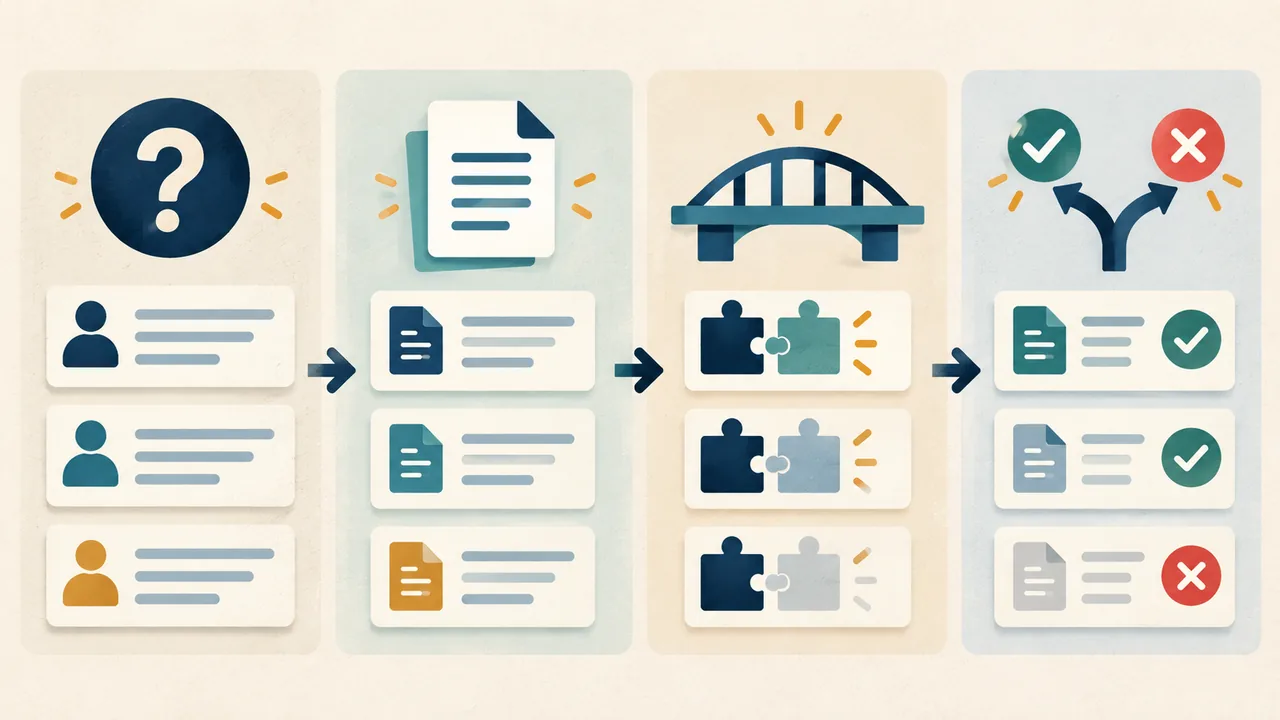
What should stay the same in every version?
Keep the facts that define your work history consistent. Tailoring can change order, space, phrasing, and selection. It cannot change what happened.
| Stable fact | What may change | What must not change |
|---|---|---|
| Employer and organization | Whether the employer name appears in a short summary or a full experience entry | The employer’s identity or your relationship to it |
| Dates | Date format, as long as it remains clear and consistent | Start or end dates to hide a gap or suggest different tenure |
| Job title | A clarifying parenthetical, if accurate and clearly marked | A more senior or specialized title you did not hold |
| Responsibilities | Which real duties appear first and how concisely they are described | Claiming responsibility for work you observed or supported but did not perform |
| Results | Which substantiated result gets space in each version | A different number, baseline, timeframe, or personal contribution |
| Tools and skills | Which relevant, genuinely used tools appear | Listing a tool as experience because a posting requests it |
| Education and credentials | Section order and relevant detail | Degree, certification, license, or completion status you do not have |
| Team contribution | How collaboration is described for each audience | Turning a group result into an individual result without evidence |
A resume does not have to repeat every fact in every version. Omission is not automatically deception: a short document cannot include an entire life history. But removing a fact can mislead when the remaining account suggests something untrue, such as hiding a temporary role’s dates so it appears to be a permanent position. Preserve enough context for the version to remain accurate and understandable.
Be especially careful with titles. If the official title is internal or unclear, use a plain-language descriptor only if it accurately describes the role. You might write “Program assistant (event coordination)” if that second phrase clarifies real duties. Do not replace “Assistant” with “Operations manager” because the target job uses that title.
What can change: order, emphasis, and detail
The best tailoring edits are modest and visible. They make the most relevant true evidence easier to find, without changing the facts underneath it.
1. Reorder the evidence
Put the experience or bullet that best answers the target job’s central need first within the space you have. For a support role, an example of resolving a participant’s registration problem may belong before invoice reconciliation. For an operations role, a recurring scheduling or record-keeping responsibility may deserve the lead.
Do not treat “most relevant” as permission to scramble chronology. Keep the dates and role structure clear. Within an experience entry, you can usually move bullets to change emphasis; where a field or format requires strict chronology, preserve it. If a role-based section order helps show a major qualification, use clear headings so the reader understands what belongs where.
2. Choose which true details to include
A detail earns space when it helps explain fit, scope, or credibility. If a bullet about routine scheduling adds little to a role that centers on customer conversations, shorten or omit it there. If the target job depends on scheduling, give it space in that version.
Omitting low-relevance information is not the same as concealing a material fact. Keep enough detail to make a job’s dates, title, and role understandable. Never remove context to imply a different level of seniority, employment status, or responsibility.
3. Clarify the action and object
A general bullet such as “Supported events” tells the reader very little. If the facts support it, a clearer version might say, “Updated participant registrations and confirmed room details for weekly community events.” This says what changed and where the work happened, without inventing an outcome.
For the customer support version, the same real work might become: “Answered participant questions and corrected registration details before weekly events.” For the operations version: “Updated attendance records and confirmed room details for weekly events.” Both are hypothetical rewrites of the same hypothetical duties. Choose only the one that matches what the person actually did.
4. Use the target’s language when it fits the fact
If a posting asks for “record keeping” and your actual work involved maintaining records, that shared language can make the connection easier to see. But keyword overlap is not evidence. A term belongs on the resume only when it accurately describes your work.
If the posting uses a specialized term you have not used, prefer a plain description of the related task. You can show transferable skill without suggesting direct experience. For example, a person who kept a spreadsheet of event registrations should not claim to have used a customer relationship management system unless they did. They can describe maintaining organized participant records and be ready to discuss how that experience transfers.
5. Adjust the summary only when it adds useful precision
A summary should name a real professional focus and, where useful, two or three relevant capabilities supported below. It should not use a pile of role labels to chase several unrelated jobs.
A broad opening like “Experienced professional seeking a challenging role” occupies space without helping the reader. A targeted but grounded alternative might be “Event coordinator with experience in participant communication, registration records, and vendor invoice checks.” That line is appropriate only if those facts are true. The customer support version might foreground participant communication; the administrative version might lead with records and coordination.
If the resume is already clear without a summary, omit it. A separate file is not useful if the only change is a new headline followed by the same undifferentiated content.

What should you omit from a targeted version?
Omit detail that is both low-relevance and low-value, not detail that makes the career story coherent. The goal is a concise account of useful evidence, not a maximal inventory or a suspiciously edited history.
A simple three-question filter helps:
- Does this detail show a requirement, transferable skill, scope, or important context for this job? If yes, consider keeping it.
- Would removing it make the remaining timeline or responsibility misleading? If yes, keep enough context to prevent that impression.
- Is the resume crowded because several low-value details compete with stronger evidence? If yes, trim those details first.
A short-term unrelated role may need only its title, employer, and dates if it helps preserve a coherent timeline. A long-standing role that seems unrelated may contain the strongest evidence of communication, prioritization, training, or handling confidential information. Do not discard it based only on its industry label. Look at the work inside the job.
Likewise, do not retain every tool or task because it once mattered to you. A long list can make your main evidence harder to find. But do not delete a qualification or credential simply because it is not central if its absence would change how the reader understands your eligibility. Tailor for relevance while preserving the context that makes claims legible.
Worked comparison: same facts, different emphasis
The following example is explicitly hypothetical. It describes no actual candidate and supplies no measured job-search result. Its purpose is to demonstrate the editing decisions, not to suggest a formula that will work for every person.
Suppose a person’s verified work history includes:
- They worked as a program assistant for a neighborhood arts organization from March 2022 through August 2025.
- They responded to participant questions by email and at the venue.
- They updated registration and attendance records.
- They helped coordinate room bookings and event schedules with a program lead.
- They checked vendor invoices against event records before passing them to a manager for approval.
- They did not approve payments, manage staff, or use a ticketing platform.
They are applying to a customer support specialist role and an administrative coordinator role. The experience is the same. The truthful distinction is which relevant details the resume foregrounds and which boundaries it keeps clear.
Customer support version
Program Assistant | Neighborhood Arts Organization | March 2022-August 2025
- Answered participant questions by email and at the venue; corrected registration details and referred exceptions to the program lead.
- Updated attendance and registration records to keep participant information current.
- Coordinated event details with staff and vendors, including confirming room arrangements.
The first bullet now answers questions and gives an example of routine issue handling. The referral clause prevents an inflated claim of independent authority. Record keeping remains visible because it supports accurate service, but it no longer leads the section.
Administrative coordinator version
Program Assistant | Neighborhood Arts Organization | March 2022-August 2025
- Updated registration and attendance records for recurring events.
- Helped coordinate schedules and room bookings with the program lead.
- Checked vendor invoices against event records before submitting them for manager approval.
- Answered participant questions by email and at the venue.
The facts have not changed. The order now emphasizes records, scheduling, and invoice checking. “Checked” and “submitted for approval” are precise. “Managed accounts payable” or “approved vendor payments” would not be supported by the hypothetical record.
A different target might warrant a short summary. It might not. If the experience section already makes the fit visible, a summary adds little. If a short summary helps the reader understand the pivot from nonprofit events to a new job family, it should clarify the transferable work without relabeling the person’s past role.
Notice what these examples do not do. They do not claim a number of people served, an improvement in response time, or a result that was never recorded. They do not rename the role. They do not make a support job sound like management. More specific language is useful; invented scale is not.
Avoid the two-version traps
Separate versions can solve a real relevance problem, but they also create ways to lose control of your facts. Watch for these mistakes.
Trap 1: Changing the facts to match the job
A candidate sees “managed a team” in a posting and changes “trained a new colleague” into “managed a team.” That is not tailoring. It changes the scope and authority of the work. Keep the original fact, then explain the related skill if it helps: “Showed a new colleague the event registration process.”
The same rule applies to results. Do not turn participation in a group project into sole ownership of its outcome. If a result came from the team, say what you personally contributed. Harvard’s guide calls for fact-based resume language and specifically encourages authentic representation of the applicant’s background when using AI for editing. (Harvard College Guide to Creating a Strong Resume)
Trap 2: Rewriting every bullet for every posting
Endless revisions burn time and can make small wording changes feel more important than the evidence. Create a useful version for each genuinely distinct job family, then adjust only where a specific posting changes the emphasis. Keep a short record of what you changed and why.
If the role asks for a specific responsibility not covered by either version, return to the evidence map. Is there an example elsewhere in your history? Is the skill transferable? Is it simply absent? Make the honest decision before rewriting.
Trap 3: Keeping an “everything” version ready to send
A master record is useful as a private inventory. It is often a poor final resume because every detail competes for attention. Treat it as source material, not as your default application document. Choose what the reader needs for the role and keep the rest available for another version or an interview.
Trap 4: Treating keywords as credentials
A posting’s vocabulary can help you notice what to address, but copying a term does not establish experience. Use the language when it accurately describes the work. If a posting asks for a particular software system you have not used, do not list it. Put a real adjacent skill in context instead.
Trap 5: Letting versions disagree
Before sending either file, compare them. Check the employer names, dates, titles, degree details, and numbers side by side. Compare every changed bullet with the master record. A difference in emphasis is fine. A contradiction needs correcting or explaining.
Trap 6: Assuming two files must look completely different
The versions should be recognizably yours. Keep stable design choices and a consistent professional identity. Changing the visual template, headline, section names, and every line at once makes it harder to spot factual drift and can make the two versions seem to describe different people. Change only what improves the reader’s understanding.
A practical process for making two versions
Use this sequence when you have two job families in mind. It is deliberately short enough to repeat without rebuilding the resume from scratch for every application.
- Name the two targets plainly. Use job-family descriptions such as “customer support” and “administrative coordination,” not only two employer-specific titles.
- Read both postings for work and requirements. Mark repeated tasks, explicit requirements, tools, and preferred capabilities. Separate required qualifications from helpful extras.
- Write the role-specific evidence sentence. Complete “This person can do this job because…” with examples from your real history. If you cannot finish the sentence honestly, do not hide the gap in a rewritten summary.
- Build one factual inventory. Verify titles, organizations, dates, duties, tools, metrics, and your contribution. Mark details that need checking.
- Map requirements to evidence. Classify each match as direct, transferable, limited, or absent. Decide what to lead with, what needs context, and what should not appear as a claim.
- Choose one version or two. Use one when the requirements and strongest evidence overlap enough for one concise story. Use two when different evidence must lead or a shared summary would blur the targets.
- Edit the structure before the wording. Reorder relevant sections and bullets, then cut low-value detail. Structure usually improves clarity more than a string of synonym swaps.
- Rewrite only for precision. Use accurate verbs, name the object of the work, and include scale or results only when you can substantiate them.
- Compare each version with the source record. Check dates, titles, tools, credentials, and individual-versus-team claims. Review changes line by line.
- Check the final document. Make sure the text is readable, headings are clear, and a PDF export preserves the layout. Harvard’s guide advises checking how formatting translates to PDF; the final visual check is practical insurance against a document that looks different after export. (Harvard College Guide to Creating a Strong Resume)
Save names that make the intended use obvious, such as Resume-Customer-Support and Resume-Operations. Avoid names like final-final-new2. When you edit the source facts, update the inventory first, then decide whether either targeted version needs an update. That order reduces accidental contradictions.

How much should you customize for each posting?
Customize enough to answer the posting’s real priorities, not enough to make every application a separate writing project. The job-family version should do most of the work. A posting-specific edit should usually be a small adjustment to the order, emphasis, or relevant terminology, provided the underlying evidence supports it.
A practical rule: if a posting changes which of your real examples matters most, adjust the relevant bullets. If it merely uses a different adjective for the same capability, do not rewrite the resume to imitate it. If it requires a skill you do not have, leave it out rather than disguising the gap.
Some applications ask for a cover letter, portfolio, or responses to specific questions. Use those materials to explain context that would crowd a resume, such as why an apparently unrelated role demonstrates a transferable skill. Do not make the resume carry an entire career-change argument. Penn Career Services’ cover-letter guidance recommends using specific examples tied to role requirements, an approach that can help you decide which experiences merit explanation beyond the resume. (Write a Cover Letter, University of Pennsylvania Career Services)
There is no evidence in the sources cited here that maintaining two versions guarantees a better result. The reason to make them is narrower and practical: when the roles need different proof, a targeted structure can make your relevant facts easier to find. If it creates more errors, more confusion, or no meaningful difference in what the reader sees, simplify back to one.
How to keep the versions readable and consistent
A resume must be easy for a person to scan and must preserve its meaning when shared as a document. Tailoring can tempt you to squeeze in more text. Resist that. A second version does not need every relevant fact; it needs enough evidence to make a clear, accurate case for that target.
Keep section labels familiar and specific. Use a consistent date style and straightforward job titles. Give each bullet one main action or contribution. Avoid vague strings such as “communication, leadership, multitasking, detail oriented.” A concrete example usually carries more meaning than a list of traits.
Do not let a summary promise what the experience section cannot show. If the summary says “customer support professional,” but the work history contains no customer-facing experience, reconsider the label. A career pivot can be stated plainly: “Program assistant with experience answering participant questions and maintaining registration records, seeking to apply those skills in customer support.” Use a statement like that only if it accurately represents both the history and the current objective.
The PDF is part of the final document, not a neutral wrapper. Review the exported file after editing. Confirm that text is not clipped, bullets remain aligned, headings are readable, and the pages appear in the intended order. A clean layout cannot supply missing qualifications, but a broken export can obscure information you meant to present.
When one version is enough
Keep one version when the two targets share their core tasks, the same examples make the strongest case for both, and one summary can describe the professional focus clearly. For example, two coordinator roles in different organizations may both center on scheduling, records, and vendor communication. If the target-specific differences are small, separate documents can create busywork without making the evidence clearer.
A shared version is also a sensible choice when you are exploring adjacent roles and do not yet have enough information to define distinct job families. Start with a grounded resume that represents the common evidence. As you review real postings, note whether the same requirements recur or whether they split into different clusters. Make a second version only when that pattern becomes clear.
The strongest exception to the two-version default is substantial overlap. When both jobs value the same evidence and the same priorities, one resume can serve both if it answers each role’s core requirements without vague language or excessive breadth. Keep the exceptions visible: if one posting has a key requirement the shared resume cannot show clearly, make a narrow edit or a separate version for that target.
When two versions are worth maintaining
Make separate versions when each job family asks a different first question about your background. A recruiter for a technical writing role may need evidence of documentation, editing, and working with subject experts. A recruiter for a project coordination role may need schedules, status tracking, and stakeholder follow-up. If the same experience contains both kinds of work, two versions can give each kind enough space without pretending that one is the other.
Separate versions also help when the section hierarchy needs to change. One target might make a relevant certification or technical project central; another might need paid experience first. Clear section order can give the right evidence more prominence while preserving the dates and context. Keep the document understandable. Do not bury employment history under a heading designed to conceal it.
Two versions are not worth maintaining if you cannot explain the difference in one sentence. “The support version leads with examples of questions answered and routine issues handled; the operations version leads with records, schedules, and invoice checks” is meaningful. “This one has slightly different adjectives” is not.
FAQs
Is it dishonest to leave unrelated experience off one version?
Not by itself. A resume is a selective summary, not a complete biography. Leave out low-relevance detail when doing so does not create a misleading account of your dates, role, qualifications, or responsibilities. Keep enough information for the reader to understand the career timeline.
Should I change my job title to match the target role?
No. Keep your actual title, or use a clearly marked, accurate clarification when the title is opaque. A target title is not a substitute for the work you performed. Describe relevant duties in the bullets instead.
Can I use the same accomplishment in both versions?
Yes, if it genuinely supports both targets. You may describe different aspects of the same work, but every detail must remain true. Do not create two different outcomes or claim sole credit in one version if the achievement was shared.
Should I create a different resume for every employer?
Usually not. Start with versions for genuinely distinct job families, then make small posting-specific edits when a particular requirement changes what evidence should be most visible. Avoid a full rewrite when the posting merely uses different wording for the same work.
What if I have no direct experience for one of the roles?
Do not disguise the gap. Look for adjacent evidence from work, education, projects, or volunteering and explain the connection accurately. If no relevant example exists, omit the unsupported claim and decide whether the role is still appropriate to pursue. The resume should describe your preparation, not invent it.
How can I prevent versions from contradicting each other?
Maintain one factual source record. Compare dates, titles, education, tools, numbers, and responsibility claims before sending each version. Update the source record first when a fact changes, then revise the versions that depend on it.
Does a targeted resume guarantee an interview?
No. Tailoring is a way to make relevant evidence clearer, not a guarantee of selection, parsing, or hiring results. Employers and application processes vary, and the sources cited here do not establish an outcome promise.
Make the choice, then keep the facts stable
Start with one accurate work-history record. Compare the two job families by their requirements and the evidence each needs. If the same examples answer both, use one concise version. If different evidence needs to lead, make two versions and change only the emphasis, order, detail, and wording that the facts support.
Before applying, check both documents against the source record and inspect the final PDF. If you want a simple place to begin, browse the resume template gallery or use the free resume editor. Choose a layout that keeps your evidence readable, then make the role-specific decisions yourself.